

Interview with Martin Liu, Author of After Troy: Classical Short Stories & Book Review By Cass Garison
- Feb 9
- 12 min read
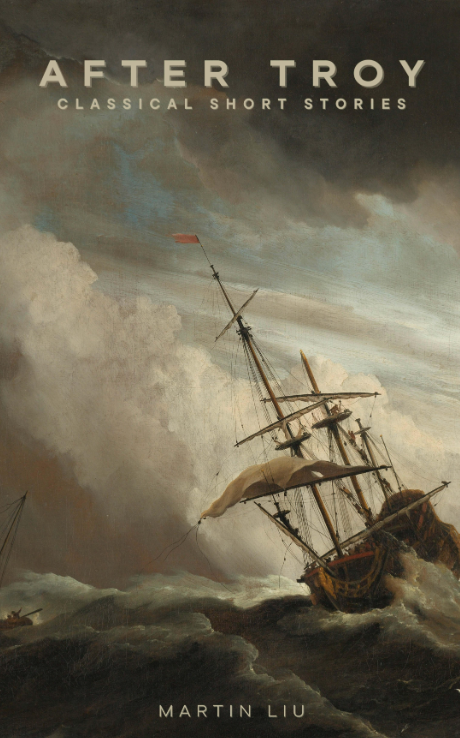
I (Cass) had the pleasure of working with Martin Liu as a mentor, editor, and book coach while he was writing After Troy: Classical Short Stories. The book was published in November, and our collaboration spanned almost a year of generating, revision, conversation, and exploration, sometimes focused on craft, and other times drifting into broader questions about literature, education, creativity, and what it means to write.
You can purchase After Troy: Classical Short Stories here, and find our interview transcribed below:
…
Cass:
First off, congratulations!! A debut book is a huge achievement, and I’ve been so deeply impressed by the amount of emotional complexity you were able to capture in your characters, the vividness of your scenes, and the nuance of bridging the ancient world with the modern one. I’d like to ask you a few questions about it, and please, feel free to answer however you feel pulled.
We've talked a lot about what it means to acknowledge your strengths and what it means to lean into those strengths throughout the process of working on After Troy: Classical Short Stories. Looking back on the book now that it is published, I was hoping that you would share your personal favorite section or a section that you feel most proud of, and why.
Martin:
I think the section that I'm most proud of is the interview with Calypso because I was able to produce a piece of work that didn't have to adhere to a certain plot. That section came more organically while thinking about certain themes that I wanted to discuss. I think there was a lot more creative freedom in it. I’m not saying that the other narrative sections don’t have creative freedom, but the interview format made it possible for me to have a little bit more. It was interesting, it was fun to write and to produce the personality and thoughts of Calypso while exploring what I wanted to express with that character. I felt like I had freedom and was given the ability to explore the emotional state of the character. I am pretty proud of that work.
Cass:
Yes yes, absolutely. I remember when you started to write that chapter it felt like a huge breakthrough in your creative process. There were obviously some moments where you were experiencing blocks or getting creatively stuck, and that was a big moment for you where you learned how to get yourself unstuck through generating your own form and structure.
Martin:
Yeah. I was also able to think about certain parts from my favorite book to support my process. When I got stuck, I tried to find parallels with one of my favorite authors, Rick Riordan. In The Heroes of Olympus series he creates this interaction between one of his fictional characters and Calypso. Ultimately, they share a connection which leads to Calypso's freedom from the island that was supposed to imprison her. That ability to just create my own character, well not really my own character, but that ability to create my own organic connection between two characters is where I found that parallel with Riordan and I enjoyed the process of doing so.
Cass:
That makes a lot of sense and leads us into our next question. What you're saying now connects to many of our previous conversations about how even if we're writing a character who feels really different from ourselves at first, we can still try to find a thing about them or the moment that they are in that we connect with to find an entry point into writing them. So I was wondering if from your perspective, is there a character in your book that you resonated with most or saw yourself in personally as you were creating them?
Martin:
This is a hard one. I can think of someone who I really did not resonate with, and that would be Dido. I think it's because her emotions and actions were so fate-driven, divine-driven, and god-driven. This brought many moments to extremes. Those extremes are just something that I don't really resonate with. Everyone's been through negative emotions, and I think all I had to do was just try and boost my own experience up to create someone more controlled by their emotions than I had ever experienced in myself. I think I didn't resonate with her but I did resonate with negative emotions. I really feel like the things these characters go through are so fantastical. It's such a fantasy, and to say that my hardships are comparable to Aeneas is just sometimes a bit, you know, I don't think it's quite comparable.
Cass:
I think it's fair to notice really big differences in external reality and experience. Even when you talk about Dido and the really big differences in how her reactions and responses feel really unfathomable to you even when you're in a state of big emotion. But then at the same time, you’ve done the work of drawing connections to enter some fantasies about what the emotion in that place may have felt like. When you're talking about really strongly not identifying with Dido, could you share a little bit more about that? I know you had mentioned her relationship with fate being connected to how her emotions came out.
Martin:
Yeah. Well, the whole premise of the Dido and Aeneas story is a love story. It's romantic. I guess it's a tragic romance story. For being as young as I am, I guess that type of experience is just not in my arsenal yet. It was hard to resonate with that level of romance personally, especially when it ends in death. I guess the lack of personal experience made it harder to portray someone who is that deeply in love, and then does not get the happy ending.
Cass:
That is a strong acknowledgement, that you were writing something that is outside of the scope of your experience and acknowledge being young factoring in. But at the same time, still choosing to enter that experience through reading and writing. There's obviously differences between having an experience in real life and having an experience that you're navigating through a character’s perspective in a book, but I do think that reading and writing can be a way to experience as well. To shift gears a little, I was hoping you might share something you learned during the process of writing this book about your writing process. Is there anything that feels important and will stick with you for your next big project?
Martin:
I think I went into writing this novella with a more organic mindset. It was kind of just like, oh, I need to write a little bit every single week. I didn't want to set myself any limitations and I wanted to just sit and write and see where it would take me. But I think I realized that although it is very fun to just sit and put what you're thinking on a page, in the future I’d like to do more early on structuring and planning for different sections. I think there was more need for me to structure sections and have a stronger plan, but at the same time not let go of the organicness to the writing. So I guess the takeaway is to try and find that blend between organic and structure.
Cass:
Yeah, that’s something we talked about throughout our process. It's important to have the free writing and stream of consciousness moments because they can help discern direction and discover what kind of structure might be available to you. But of course finding that balance between structure and flow is different for every writer and takes practice and time, doing it again and again to what sits right for you. In my perspective, finding balance in writing can also help teach how to find other types of balances in life as well, and the reverse. That connects to the next question. If you could go back and talk to yourself before you started this project, what would be a piece of wisdom that you would give your past self?
Martin:
This sounds kind of cliche, but I really think I would tell myself to just enjoy the process. During this project, there were a lot of things going on like work and school that made me feel rushed and made it hard to have time to fully flesh out things. I think that I diverted away from the originality sometimes, so I think my reminder would be to enjoy the writing process while creating something of my own. For my next project I'm hoping that I can go into it viewing it less like a mission and more like something I want to really enjoy.
Cass:
I really hope that for you too, and I have big, big hope that you will come back to writing and find ways to slow down and savor and find more joy in the process. That also connects to what you were saying prior in terms of finding balance. Without a timeline where you need to keep things moving in a particular way, you have time to spread out and try on new things and find ways of engaging with content that feels both exploratory and aligned. That is absolutely what I want for you, for you to have that space for yourself and your process in the future. Even with a timeline, you already found so many great things. You constructed so many incredible characters and really vivid scenes. I am excited to see what comes from you without as much stress from other obligations, I think it's going to be really amazing.
We have time for two more questions today. The first: how did it feel to work with an editor and book coach for the first time? How did it change your process or approach to have someone to bounce ideas around with and be in conversation with during the writing process?
Martin:
I thought there was a lot of help you provided if I was ever stuck in a section, and having someone who's more experienced and giving me some exercises or ways to kind of open up my brain to finally produce one of my favorite sections of the book. That was obviously very helpful, but I think what I enjoyed the most during this collaboration was our organic talks where we got to explore what it means to write and what it means to write for me and why I'm doing this, the purpose of it. We even diverged off to other academic topics and talked about reading and different themes and those conversations felt more valuable to me than ultimately the production of this novella.
Cass:
I valued conversation with you too and I absolutely reflect all of those sentiments back. Obviously I am someone who has been mentoring you through this project, but the value of our conversations have never been one-sided, and we had so much mutual exploration. It has been wonderful to learn things from and with each other and discover things together by asking questions together. That is all really good to hear and I also think that the questions and conversations that happen behind the scenes to the writing, about the writing itself and about life and the world, are just as important as the writing.
There are things that happen on paper, and there are all the other things happening, being thought, being felt, being seen that form the alchemy that make it possible for those things to happen on paper. We are always bringing all the experiences we’ve ever had into the room whether we know it or not, and can use building agency over our access to those as ways to nudge some of the stuck things loose.
Martin:
I'm glad it was a mutual exploration and I just want to add that I think it is very helpful. In a school setting I feel like a lot of peers would resonate as well, especially when we're set to abide by a certain guideline where you read a piece of text and then you write an analytical essay or a creative piece, but you always have to conform to certain standards and aren’t really given the freedom to ask questions or question certain things. During our time working together, some of our conversations allowed me to find someone that can also question certain norms, to find some of the irony in literature. So I was glad we were able to do that.
Cass:
You were exceptional to work with in that you were already having big personal reckonings with the irony of the structure that is given in a lot of school systems and the irony of how systems like grading or rubrics impact creativity. You came in already thinking about those things and having relationships with those things yourself. It was great to be a part of those conversations with you.
Martin:
Maybe I'm just a rebellious person.
Cass:
A little bit of that too. I think the two go together.
Martin:
Yeah. They're connected.
Cass:
So I feel like that kind of leads us into our last question, which is just sort of a big what's next. It doesn't have to be in terms of your plan for a future next book, but generally: what do you hope for in your writing life? What do you want out of your creative life? This could be in a larger sense, or in terms of where your conceptual interests might take you next.
Martin:
Actually this happened during our writing process. I remember you gave me some advice for one of my school projects, which was a creative piece where I had to create a hero. Through our brainstorming, I actually thoroughly enjoyed that writing process. I feel like that gave me a lot of liberty to explore different topics. Of course I still enjoy mythology and classics and I still will enjoy it but I don't think I'm limited to mythology. One of the topics of my creative piece in school was about romance and love. I really want to delve into understanding love and maybe read some creative pieces on what love means because it's always different for different people. I think I'm in a stage where I kind of want to understand it for myself too. I think classics will only aid in that process because there's so many romance and love stories in ancient history and mythology. So yeah, I'm not feeling restricted to any topics really.
Cass:
Yeah, that makes a lot of sense and connects to what you were talking about before about finding certain experiences that you were writing hard to relate to at this moment in your life. I feel like sometimes the things that are hard to relate to in a moment or sort of elusive to us, it makes sense that we are drawn to them.
Martin:
Yeah, I guess I'm also a very organic person. Establishing a theme that I might want to write on in the future is just not really my style. As my experiences grow and as I go off to college and experience different things I'm sure my interests will change. What I am sure of though is that I think I would like to continue writing. I think creative writing was very fun and even in the school setting was very fun and thanks to our brainstorming and your help that made it really fun. So I think I will, I will definitely continue. But the theme is not decided.
Cass:
Yeah, that is real. And I think acknowledging yourself as an organic person and sort of letting yourself lean into the real world moments as a way to inform where you're conceptually pulled is a very honest approach to that question. I too hope that you continue to write too.
Book Review
After Troy: Classical Short Stories by Martin Liu
“I want people to realize that I am not always the glorified hero. I am human and I make mistakes.”
After Troy recalibrates mythic expectation, framing heroes as humans with hearts that feel deeply,
minds that turn inward, lives that conflict with their god-given destinies. Liu’s prose is lush and
grounded in a scene-driven exploration that makes the ancients intimate. Rewriting Aeneas, Liu tells:
us
“The gods didn’t save him from the fires of Troy because they liked or cherished him, or even because
they were deities that cared about preserving their creations. They only saved him because they needed
him. They needed him for their grand scheme, an end goal that Aeneas couldn’t quite pinpoint the
purpose of just yet. All he knew was that the gods would not let him stop. So, the diseases started
taking hold. His people died. The land became poisonous. All the crops withered.”
Here, divinity is stripped of benevolence and replaced with utility. Liu’s gods are strategists, and the
human world is their chess set. This is where the collection’s voice comes into focus, proving deeply
attentive to interiority. Human characters like Circe, Dido, Aeneas, and more are rendered as thinking,
rationalizing, self-contradicting beings, with and against the divine forces that toil with their fates.
Liu invites us into Circe’s psychic and emotional landscape:
“I am unsure whether it was out of curiosity or guilt, but after a few days I couldn’t help but make my
way to the other side of the island to check in on him. Wishing for him to be once again swept away by
the gods, I was disappointed. He emerged from a wooden cabin he had built himself, and in his three
days since I saw him last he had completely transformed: clean and washed, hair cut and flowing, even
his form seemed stronger than before. A tall and handsome man. Noticing his wellness, I turned
around and went back to my home without a word.”
Liu shows equal restraint, allowing judgment, envy, guilt, and resignation to coexist without the need
for simplified rationalization. After Troy lingers willingly in profound rumination, brings an
unabashed urge to reveal the scaffolding through which characters come to know themselves and
others. As much as there is thought and feeling, there is prayer, desire, wish:
“Oh, how Aeneas wished he’d joined the hordes of fallen warriors during the attack on Troy. At least
he would’ve been remembered as another hero who died fighting for his country and not just some toy
for the gods to play with.”
This multifaceted longing lands with gravity precisely because it feels so contemporary, so timeless.
Liu’s characters contend with their own agency under systems larger than themselves, with the burden
of survival when survival itself is weaponized. These stories transcend eras through their interrogation
of personhood within mythic narrative, in their asking what it means to live and find purpose.
Comments